
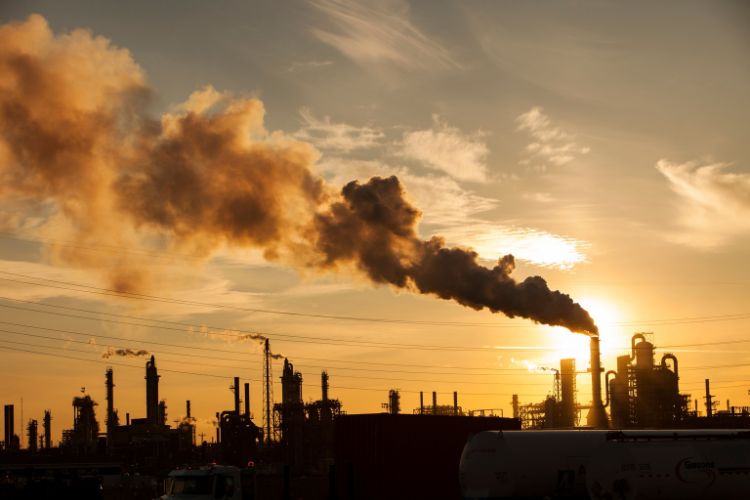
Today in Parliament, Abigail called out the Minns Labor government for trying to ram through laws that will fast-track gas projects by classifying gas as "renewable energy". The Greens fully support fast-tracking renewable energy - but gas is not renewable!
Abigail said:
The Energy Legislation Amendment (Prioritising Renewable Energy) Bill 2026 grants the New South Wales energy Minister new powers to hand-pick the most critical generation, storage and network projects in the planning pipeline for streamlined approval. New South Wales is in the middle of an energy transition that will determine the reliability and affordability of power for every household and every business in this State for decades to come. Our remaining coal-fired power stations are approaching retirement—yippee! The infrastructure that must replace them—wind, solar, batteries, transmission and pumped hydro—must continue to be built at pace, and even faster, if we are to have any hope of meeting our emissions reduction targets. A massive pipeline of projects is looking to be built, and that is brilliant.
But not every project is equal. Not every proposal in the planning pipeline is equally important. Some projects are genuinely critical to keeping the lights on, such as major transmission links, large-scale storage, and generation that replaces retiring baseload. Others are speculative, poorly sited or unlikely ever to reach financial close. The planning system currently treats them all the same. That is inefficient. It is frustrating for proponents of the best projects and exhausting for communities and agencies that cannot distinguish the serious from the speculative. The planning system should work faster for the projects that matter most. Wind energy projects are taking an average of 10 years from pre-planning to commissioning. Solar projects are taking five. The planning pipeline is congested. We are hearing from communities that they are feeling fatigued, unsure where to direct their energy, buffeted from announcement to announcement and losing confidence in the process, so I give credit to the Minister for bringing this bill forward. The priority energy project [PEP] mechanism gives the Government a tool to move the projects that matter to the front of the planning assessment queue. That has genuine merit and value, not only for the planning system but also for investors, network planners and the communities that need clarity about what is actually coming.
The Greens welcome the benefit-sharing reforms. Planning agreements for renewable energy projects have been inconsistent and often inadequate. Communities that host major energy infrastructure deserve to see real, tangible and meaningful benefits, not whatever a developer decides to offer. The power to set minimum contribution levels and direct those contributions towards prescribed community purposes will make a real difference. The bill delivers a fast track in a two-step process. First, the Minister for Energy gets the power to pick projects. New section 197 of the Electricity Supply Act allows the Minister to declare, by written order, that any energy project or any class of projects is a priority energy project. Those projects then receive accelerated treatment in the planning system, priority assessment, streamlined referral to the Independent Planning Commission and the ability to be declared State significant development without first obtaining IPC advice.
The bill does not remove environmental or community assessment requirements. That is an important point, and the Government is right to make it. Ultimately, it is not anything new. The powers already exist. They, as well as the critical State significant infrastructure [SSI] planning pathway, have always been available as a more streamlined alternative. What the bill does is restructure who controls the timing and pathway of those assessments, and it places that control in the hands of two Ministers, the Minister for Energy and the Minister for Planning and Public Spaces. Legislating PEPs will act to encourage greater use of the SSI planning pathway to support faster delivery of clean energy projects. That is a significant grant of executive power, which is why the integrity safeguards around the mechanism matter enormously. That is where this bill falls over—at the question of integrity.
The bill is called the Energy Legislation Amendment (Prioritising Renewable Energy) Bill. The Government's media messaging states that it will "speed up the delivery of key renewable energy projects". The Minister has framed it as a bill that will power the transition from coal to clean energy. Yet we find, bold as brass, that the definition of "energy project" for the purposes of these priority energy projects includes "gas-fired firming generation". Gas is not renewable energy. Let me say that again. Gas is a fossil fuel. It contributes to climate harm, local air pollution and has upstream impacts on land and water. A new gas power station declared a priority energy project under this bill receives exactly the same fast-tracked planning treatment as a wind farm or a battery.
I understand the argument for gas as a firming technology during the transition. The Australian Energy Market Operator [AEMO] draft 2026 Integrated System Plan projects that 14 gigawatts of gas-fired generation will need to be in place by 2050, but that figure deserves scrutiny. AEMO itself acknowledges that extended periods of low variable renewable energy [VRE] generation are rare and extremely difficult to predict. Researchers from Griffith University, modelling 42 years of real-world weather data, found no evidence of extended low VRE periods in the National Electricity Market. AEMO's own stress testing of its optimal development pathway—applying the most severe historical weather conditions and extending their duration—found the system demonstrated resilience.
Meanwhile, batteries are rapidly displacing gas in the very role it is supposed to fill. In just over three years, batteries have gone from a near-zero market share in California's grid to taking over most of gas's evening peak role. Similar trends are emerging in South Australia. S&P Global forecasts gas capacity expansion of just three gigawatts by 2050, a fraction of AEMO's 12.8-gigawatt projection—and peaking gas is one of the most expensive forms of generation. If utilisation falls to the 7 per cent that AEMO forecasts, the levelised cost could exceed CSIRO projections by 41 per cent to 81 per cent. AEMO's draft 2026 Integrated System Plan has household battery forecasts far too low in the short term. In fact, we are on track to exceed AEMO's 2030 forecast by the middle of 2026. Even that underestimation does not foreshadow any need for additional gas generation in New South Wales before 2038. There is no justification for including gas in an accelerated planning pathway today.
This is not a theoretical concern. Just this week the Premier was asked during question time about the Narrabri gas pipeline. He told the lower House that he and the Minister had met with Squadron Energy and cheered on that company connecting to the east coast gas pipeline. Minns has also been a vocal advocate of the Narrabri Gas Project and has been cheering on the expansion of fracking into the west of New South Wales. Squadron Energy just so happens to be one of the companies planning on building new gas-fired firming generation plants—projects like the Dubbo Firming Power Station, approved by the Independent Planning Commission of NSW in May 2024 as a 64-megawatt gas-fired firming station. Squadron has since described it as a 180-megawatt facility, suggesting a modification or expansion may be underway. It also plans to build the Illawarra Firming Power Station.
I wonder which of those projects the Minns Labor Government is planning on giving priority status to if the Premier is touting the meetings he and his Ministers are having with this gas plant proponent. The Government is actively encouraging new gas infrastructure in New South Wales. It is doing so while simultaneously creating in this bill an unconstrained fast-track planning pathway that covers gas projects. Members should understand what that combination means in practice. The New South Wales Labor Government has form in this regard. Last year it announced the creation of the Investment Delivery Authority. Describing the IDA's purpose, the announcement stated:
Businesses have said that making major investments in NSW is too complex and too time consuming, which is slowing down productivity.
The Investment Delivery Authority will address this by helping cut through red tape, coordinate across government, and encourage investment.
…
Major projects able to be considered may include hotels, data centres, renewable energy projects, and commercial developments.
But amongst the energy projects selected for special treatment by this authority is the Hunter Gas Pipeline. It is exactly this obsession with gas projects that has given us such pause with this legislation. Put simply, The Greens have no confidence at all that the New South Wales Minns Labor Government would not select gas projects as priority energy projects, and directly harm the State's trajectory towards a zero emissions energy system. We will be seeking to amend the bill to remove that possibility. The New South Wales Labor Government must remove gas-fired firming generation from the definition of energy projects eligible for PEP declaration. If the Government wants to fast-track gas, it should introduce a separate bill and make that argument on its merits—not try to slip it through under the banner of renewable energy, which gas is patently not.
Our other amendments address the currently unconstrained ministerial discretion contained in the bill. Under the bill, the energy Minister can declare any energy project a priority energy project with no criteria to satisfy, no requirement for consultation, no obligation to publish reasons and no parliamentary disallowance. The only transparency measure is publication on a departmental website. We will be asking the Minister to, at a minimum, publish reasons for a decision. The Greens will support the second reading of the bill but we flag that we will require serious amendments in order to ultimately pass it.
The energy transition is real and urgent, and it requires the Government to act with purpose. The bill provides genuine tools to address some genuine bottlenecks, and the Government deserves credit for that. But ultimately nobody is really screaming out for this legislation. It is an improvement on the existing system, but it is not good enough to get over the absolute clanger that is the sneak inclusion of prioritising fossil fuel energy projects in the so-called "prioritising renewable energy" bill. The Greens amendments do not undermine what the Government is trying to do; they will strengthen it. They ask the Government to be honest about the scope of this fast‑track pathway—that it is a renewable energy pathway, not a fossil fuel pathway. They ask the Government to show its reasons when it exercises the most significant new power that the bill creates. Our amendments will bring the bill back to its stated purpose and, if the Government is being honest with the people of New South Wales, it would support them.
Read the debate in Hansard here.
28 May 2026